
Rodent cleanup in Biloxi, MS
Once the animals are gone, the droppings, urine, and nesting material they leave behind still need to be dealt with. Rodent cleanup removes contaminated material with methods that limit dust and germs, then disinfects the area so it is safe to use again. A local company can handle cleanup on its own or as part of a full removal job.
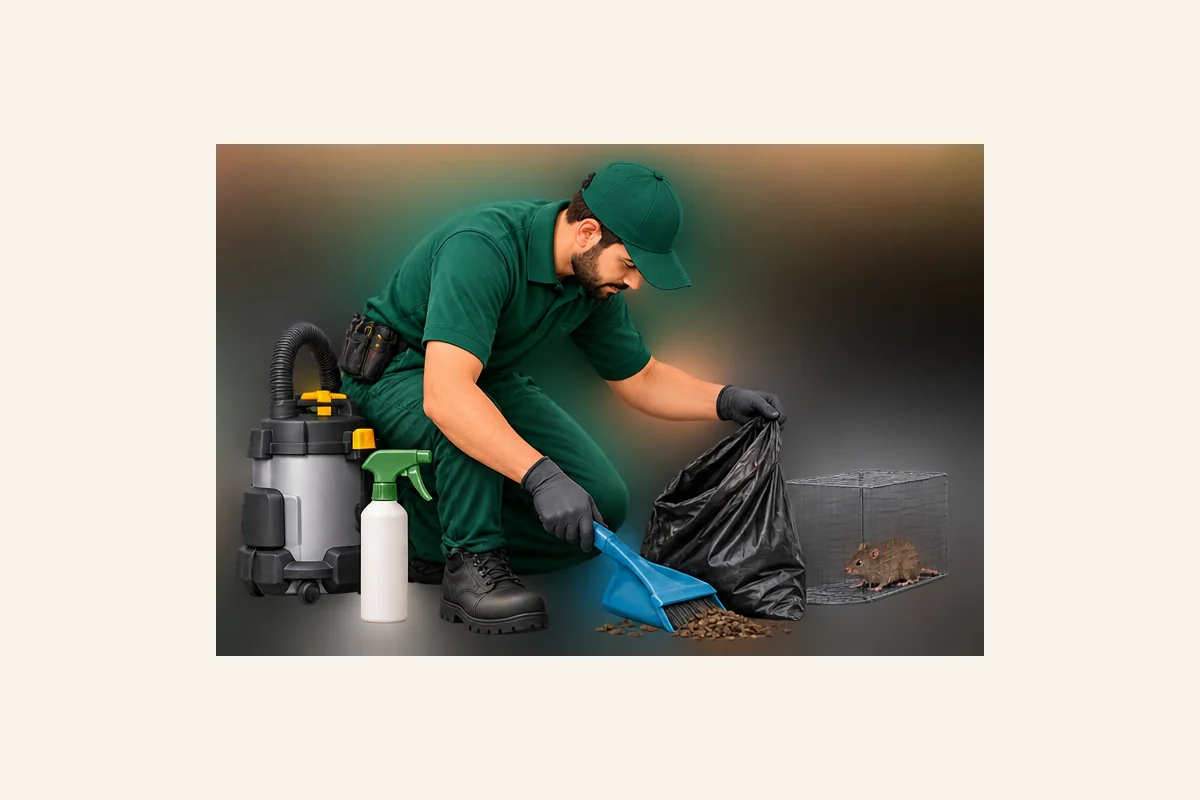
- Avoid
- Dry sweeping and ordinary vacuums
- Method
- Wet cleaning with disinfectant
- Protection
- Gloves, mask, ventilation
- Insulation
- Replaced if soiled
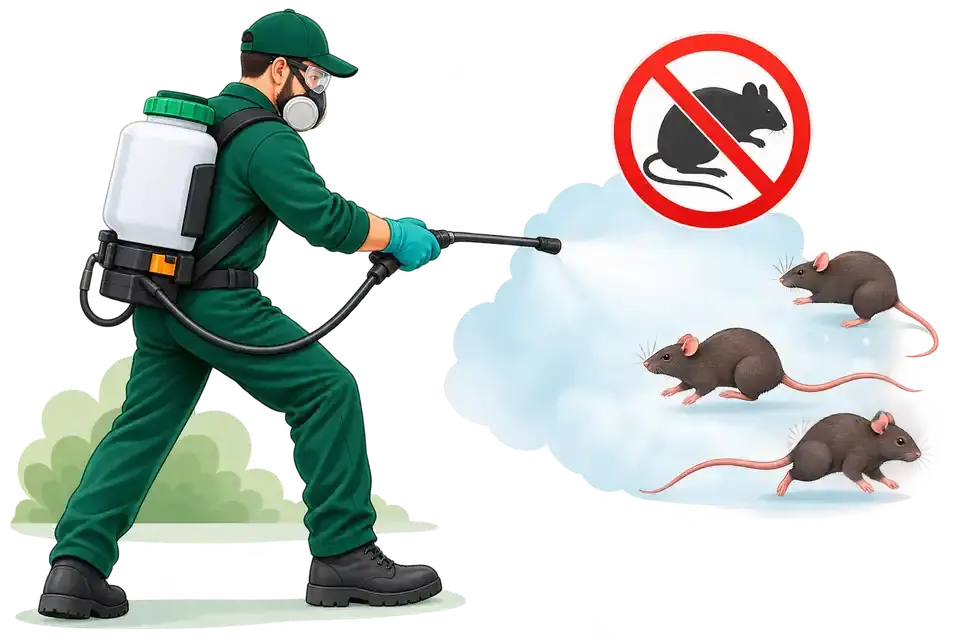
Key points
What to know first
Use the wet method
Dry sweeping releases dust that can carry germs.
Protect yourself first
Gloves, a mask, and ventilation come before cleaning.
Disinfect and dry
Surfaces are disinfected and aired out before reuse.
Confirm it is clear
A final check looks for droppings, stains, and odor.
Why cleanup is a separate job
Removing the animals does not remove the contamination. Droppings, urine, and nesting material can stay in walls, insulation, cabinets, and stored boxes for months.
Some of those materials dry out and become dust that moves through the air when someone walks past or runs a fan. Cleanup addresses that risk directly, rather than leaving it for the next person who opens a closet.
Cleanup also matters for odor. Rodent urine has a strong smell that can linger long after the animals are gone, and it can attract other animals if left in place.
A thorough cleanup removes the source of the odor, so the space does not continue to smell after the job is finished.
In many cases, cleanup follows a removal and sealing job, and the company plans the two together. Cleanup can also be requested on its own when a property has already been emptied of animals but still needs remediation before it is used.
The health risks in plain terms
Rodent droppings and urine can carry bacteria, viruses, and parasites. Some of these can cause serious illness, and the most serious risks come from breathing in dust that has been stirred up from dried material.
The risk is highest in closed spaces such as attics, crawlspaces, sheds, and rooms that have been shut for a long time.
Hantavirus is one example of a serious risk linked to rodents in some parts of the country. Infection is rare, but it can be severe, and it spreads when people breathe in contaminated dust.
That is one reason cleanup should avoid sweeping, vacuuming with an ordinary vacuum, or any method that puts dust into the air.
If you have been cleaning up after rodents and later develop a fever, muscle aches, cough, or shortness of breath, contact a health care provider and mention the exposure. Early medical attention matters, and the provider can decide what tests or care are appropriate.
When to call a professional instead
Some situations are better handled by a company than by the homeowner. Large areas of contamination, insulation soaked with urine, dead animals inside walls, and damage to heating and cooling systems need professional equipment and training.
A company can also work faster and with better controls when the space is large or hard to access.
Call a professional if anyone in the home has asthma, a weakened immune system, or another condition that makes respiratory illness more serious. The same applies to pregnant people and young children.
Cleanup involves exposure that may be harder for these groups to tolerate, and a plan that reduces that exposure is worth paying for.
Trying to clean a contaminated space alone can also spread the problem. Materials carried from one room to another, dust that drifts into a ventilation system, or cleaning tools that are not disposed of properly can extend the contamination.
If you are unsure, ask the company to assess the space before you begin.
Preparing the area before cleaning
Preparation makes the job safer and faster. Keep children and pets out of the work area, and clear the room of food, dishes, and open containers.
Turn off the heating and cooling system so that dust is not pulled through the ducts. Open windows and doors when the weather allows, so the space has fresh air moving through it during the work.
Gather the right supplies before starting. Wear rubber or nitrile gloves, eye protection, and a respirator rated for particulates if the area is dusty or contaminated.
Have paper towels, a disinfectant solution, sturdy plastic bags, and a spray bottle ready. Avoid cleaning tools that will be reused in other areas unless they can be disinfected completely.
Plan where contaminated materials will go before you start. Bags should be sealed and labeled for disposal, and the route out of the building should be clear.
Moving materials through the home without a plan can spread the contamination to clean areas.
Wet cleaning, step by step
The standard approach is wet cleaning. Dampen droppings and nesting material with a disinfectant solution before touching them, so that particles stay in place.
A common mixture for hard surfaces is one part household bleach to ten parts water, though product labels should always be followed. Let the solution sit for several minutes so it can work on the material.
Use paper towels to pick up the wet material, placing it directly into a bag. Work from the outside of the contaminated area toward the center, so you do not spread material into clean space.
Wipe the surface with disinfectant after the material is removed, then allow the area to dry with ventilation running.
Seal the bag, place it inside a second bag, and dispose of it according to local rules. Remove gloves carefully so that the outside of the glove does not touch your skin, and wash your hands thoroughly afterward.
Clean and disinfect the tools you used, or discard them if they cannot be cleaned.
Removing nesting material and insulation
Nesting material is often the most heavily contaminated part of a rodent problem. It may be shredded paper, fabric, or insulation that has been soaked with urine.
Remove it wet, using the same method as droppings, and avoid pulling it apart in a way that releases dust. Bag the material while it is still damp.
Insulation that is soiled or matted usually cannot be cleaned effectively, so it is removed and replaced. The company should explain whether insulation needs to be replaced, which areas are affected, and how the replacement will be installed.
Our attic rodent removal page describes how insulation decisions are made during an attic job.
Look behind and beneath insulation as you clean. Nests and droppings often sit in the spaces between joists or in corners where the insulation has been pushed aside.
Removing only the visible material can leave contamination behind.
Cleaning fabrics, stored goods, and personal items
Porous items such as cardboard, paper, upholstered furniture, and mattresses are difficult to disinfect fully. Contaminated cardboard and paper are usually discarded.
Fabrics and clothing can often be washed in hot water with a detergent, but the decision depends on how heavily they were exposed and the material itself.
Books, photographs, and keepsakes can sometimes be saved, but they should be handled carefully and cleaned by a professional if they are valuable. Stored food should be discarded if it was exposed, and containers should be washed thoroughly before reuse.
Ask the company which items it recommends discarding and which it can help you clean.
Odor control after cleanup
Urine odor can remain even after visible material is gone, because it soaks into wood, drywall, and insulation. Enzyme-based cleaners are often used to break down the compounds that cause the smell.
They work best when applied to the actual source, not just to the surface where the smell is noticed.
Ventilation is another important tool. Running fans, opening windows, and keeping the space dry help odor dissipate.
If an odor returns after cleanup, it may mean that some material was missed, or that a source remains inside a wall or ceiling. Call the company so it can check the area again.
Disposal and final checks
All contaminated materials should be placed in sealed bags and disposed of according to local rules. Some rules require specific handling for materials from animal contamination, so ask the company how it plans to dispose of the waste.
Do not leave bags open in a garage or near a door where they could spread contamination.
A final check confirms that the area is clean. Look for remaining droppings, stains, and odor.
The company should walk the space with you, explain what it found, and confirm that the area is ready for use. Keep a note of the date and what was cleaned, which can help if questions come up later.
Cleanup for homes and businesses
Homes and businesses have different cleanup needs. A home often involves attics, crawlspaces, and storage areas that have been closed for a long time.
A business may need to meet food-safety standards, document its cleanup, and coordinate with staff so the work does not disrupt operations. Our commercial rodent control service describes how those plans are organized.
Food-service areas, warehouses, and retail spaces need cleanup that addresses surfaces, equipment, and stored products. Discarding exposed food, cleaning equipment, and confirming that surfaces are disinfected are standard parts of that work, and the company should document each step.
Questions about rodent cleanup
Can I clean up droppings myself?
Small, dry-area cleanup can often be done with the wet method and proper protection. Large areas, insulation, and enclosed spaces are better handled by a company with the right equipment and training.
Is sweeping or vacuuming safe?
Not for rodent droppings. Sweeping and ordinary vacuums can stir up dust that carries germs. Use the wet method instead, and do not use a standard vacuum on contaminated material.
How long does cleanup take?
It depends on the size of the area and how much material is present. A small job can take a few hours, while attics or large spaces can take longer. The company gives its timeline after assessing the space.
Do I need to replace insulation after cleanup?
Sometimes. Insulation that is soiled, matted, or heavily contaminated is usually replaced. The company will explain which sections need replacement and why.
When is the space safe to use again?
The space is ready once cleanup, disinfecting, and ventilation are complete, and the final check shows no remaining droppings, stains, or lingering odor. Ask the company to confirm this before you return items or use the room.
Next steps
If you have found droppings, nesting material, or a strong odor in a closed space, call us at 555-555-555 or request a callback. Describe the area and what you have seen.
We will connect you with a local company, and you can ask it how it plans to protect your household during cleanup before you agree to work.
For more on how cleanup fits into the full process, visit our homepage guide. You can also read about rodent exclusion, which keeps the area from being contaminated again.