
Attic rodent removal in Biloxi, MS
An attic is one of the most common places for rodents to nest, because it is warm, quiet, and rarely disturbed. Removing animals from an attic means finding the nest, safely removing the animals, and sealing the openings they used. A local company does the inspection and the work, and it explains each step before it begins.
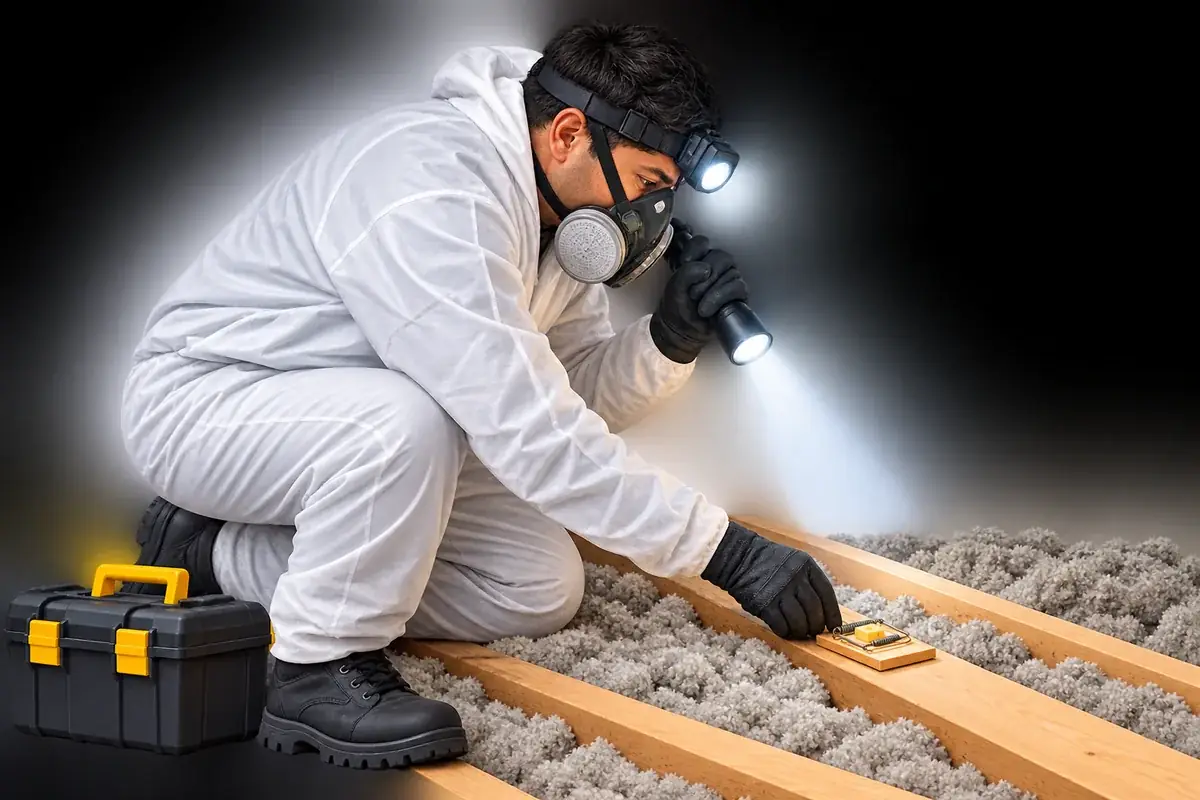
- Where to look
- Insulation, rafters, vents
- Main concern
- Nests and contaminated insulation
- Before entering
- Framing and floor are checked
- After removal
- Sealing and cleanup
Key points
What to know first
Find the nest
Insulation, rafters, and vents are checked first.
Enter the attic safely
Framing and floors are checked before anyone walks the space.
Replace soiled insulation
Contaminated insulation is replaced, not just cleaned.
Seal the roof openings
Eaves, soffits, and vents are closed.
Why attics attract rodents
Attics offer what rodents need most: shelter from weather, insulation to build nests with, and a dry place to raise young. Many attics are also hard to reach and go unchecked for months.
Stored boxes, holiday decorations, and old furniture give animals cover, and a roof that meets the walls at the eaves creates an easy climb.
Roof rats are the species most often found in attics in this area, because they climb well and can enter through openings high on the structure. Mice also use attics, especially where insulation is loose or stored materials offer nesting material.
The species affects the plan, so the inspection identifies which animals are present before any work begins.
Attic activity can spread quickly. A nest that starts in one corner can grow into a colony, and animals can move down into wall voids and ceilings below.
Early attention keeps the problem limited to the attic and reduces the damage left behind.
Signs of rodents in the attic
The most common sign is sound. Scratching, scurrying, and gnawing usually happen at night and are louder in the early hours.
Some people hear a thump or a rolling noise, which can come from an animal running across the rafters. If the noises stop when someone walks in, that does not mean the animals are gone.
Look for droppings on the insulation, along the top of beams, and near the attic hatch. Rub marks along the rafters, gnawed wood or wiring, and shredded insulation or paper are also strong clues.
A nest may look like a loose ball of insulation, fabric, or paper, usually tucked into a corner or against a chimney or vent.
Stains on ceiling drywall can indicate that animals are moving through the space above. A musty odor in the attic or in rooms below can also point to nesting material or droppings that have built up over time.
If you notice any of these signs, schedule an inspection rather than waiting for the problem to grow.
How technicians find the nest
An attic inspection begins with safety. Technicians check the stability of the framing and the condition of the floor before walking the space, and they avoid stepping on insulation where the ceiling below could be damaged.
They also look for hazards such as exposed wiring, old electrical boxes, and areas with weak decking.
Once inside, the technician follows the signs. Droppings and rub marks lead to the routes animals use, and those routes usually lead to the nest.
Nests are often near a warm spot, a vent, or a chimney, and they may be hidden under insulation or behind stored items. Finding the nest is important because it tells the company how many animals are present and where the main activity is concentrated.
The inspection also includes the outside of the roof. Technicians check the eaves, soffits, vent openings, and places where branches touch the roofline.
The openings found from the outside show how animals are getting in, and the attic inspection shows where they are going once they arrive.
Removing animals from the attic
Removal depends on the animals and the layout of the attic. Traps are placed along the routes and near the nest, and devices are checked on a schedule.
In some cases, a technician may use a combination of traps and monitoring stations to confirm that activity has stopped before the final steps. Rats in particular can be cautious around new objects, so the timing of trap placement matters.
Animals that are trapped or found dead should be removed carefully. Gloves and bags are used, and the company follows local rules for disposal.
The nest material is removed with the same care, because it may carry droppings, urine, and parasites. Work is planned so that the removal does not spread contamination into living spaces below.
Some attic jobs require the removal of insulation that has been soiled or matted. That decision is made after the inspection, because soiled insulation can hold odors and germs.
The company should explain whether insulation needs to be replaced and how the replacement will be done, so you know the cost and the timeline before work starts.
Sealing the attic after removal
Removing animals from the attic without sealing the openings means new animals will likely move in. The sealing work focuses on the routes identified during the outside inspection.
Gaps at the eaves and soffits, damaged vent screens, and openings around chimneys and roof penetrations are typical repair points.
Repairs use materials that rodents cannot easily chew, such as metal mesh and durable filler. Vent screens are replaced with a finer or stronger mesh, and loose soffit panels are secured.
Where a repair requires roofing, flashing, or structural work, a licensed contractor is needed, and the company will identify that work in its report. Our rodent exclusion page describes the sealing process in more detail.
Some attic openings are hard to reach from the inside, so the company may need to work from a ladder or the roof. Ask the company how it plans to access each repair point, and confirm that the roof work is done safely.
Cleanup and ventilation
After animals are removed and the nest is cleared, the attic needs cleaning. Droppings and contaminated materials should be removed carefully.
Dry sweeping or vacuuming with an ordinary vacuum can release dust into the air, so the cleanup uses methods that keep particles down. Wet cleaning with a disinfectant is commonly used, and workers wear protective gear.
Ventilation matters too. An attic that is sealed tightly may trap moisture, and a damp attic can encourage mold and attract insects.
The company should check the vents and airflow, and make sure any sealing work does not block ventilation that the building needs. Our rodent cleanup service covers the sanitizing process in detail.
If you have stored items in the attic, you may need to remove them during the job. Ask the company how much space you should clear, and whether any items should be cleaned, discarded, or kept away from the work area.
Attic work in homes and businesses
Homes often have attics with a mix of stored items, insulation, and access points that are shared with living spaces. Businesses may have larger attics, rooftop units, and ductwork that create more routes for animals.
Commercial work usually includes scheduled visits and a written report, which helps property managers track what was found and what was done.
In multi-unit buildings, attic work must consider shared roof spaces and access between units. The company should coordinate with the property manager to plan access, timing, and communication with residents.
Our commercial rodent control page explains how these plans are organized.
Questions about attic rodent removal
Can animals in the attic get into the living space?
Yes. Rodents can move through gaps in ceilings, wall voids, and around light fixtures and ducts. Sealing those gaps and checking the ceiling below are part of a complete job.
Is insulation always removed?
Not always. Insulation is removed when it is soiled, matted, or contaminated. The company decides after the inspection and explains the options, including replacement.
How long does attic removal take?
Many attic jobs need more than one visit, because removal, sealing, and cleanup happen in stages and a follow-up check confirms the work. The company gives its timeline after inspection.
Will the attic be safe to use after the job?
After cleanup and proper sealing, the attic should be safe for storage and access. Ask the company to confirm that cleanup and ventilation are complete before you return items to the space.
What if I hear noises again after the job?
Call the company promptly. A returning sound can mean an animal was missed, a new opening has appeared, or the seal has shifted. The company should compare the new signs with its earlier inspection and check the most likely routes.
Next steps
If you hear noises in the attic, see droppings near the hatch, or notice stains on the ceiling, call us at 555-555-555 or request a callback. Tell us where you have seen signs and whether the noises happen at night.
We will connect you with a local company, and you can ask it about its nest search and sealing plan before you agree to work.
For more about how the whole process works, visit our Biloxi overview page. If you are not sure whether the attic activity is mice or rats, the inspection will confirm the species before any plan is chosen.